
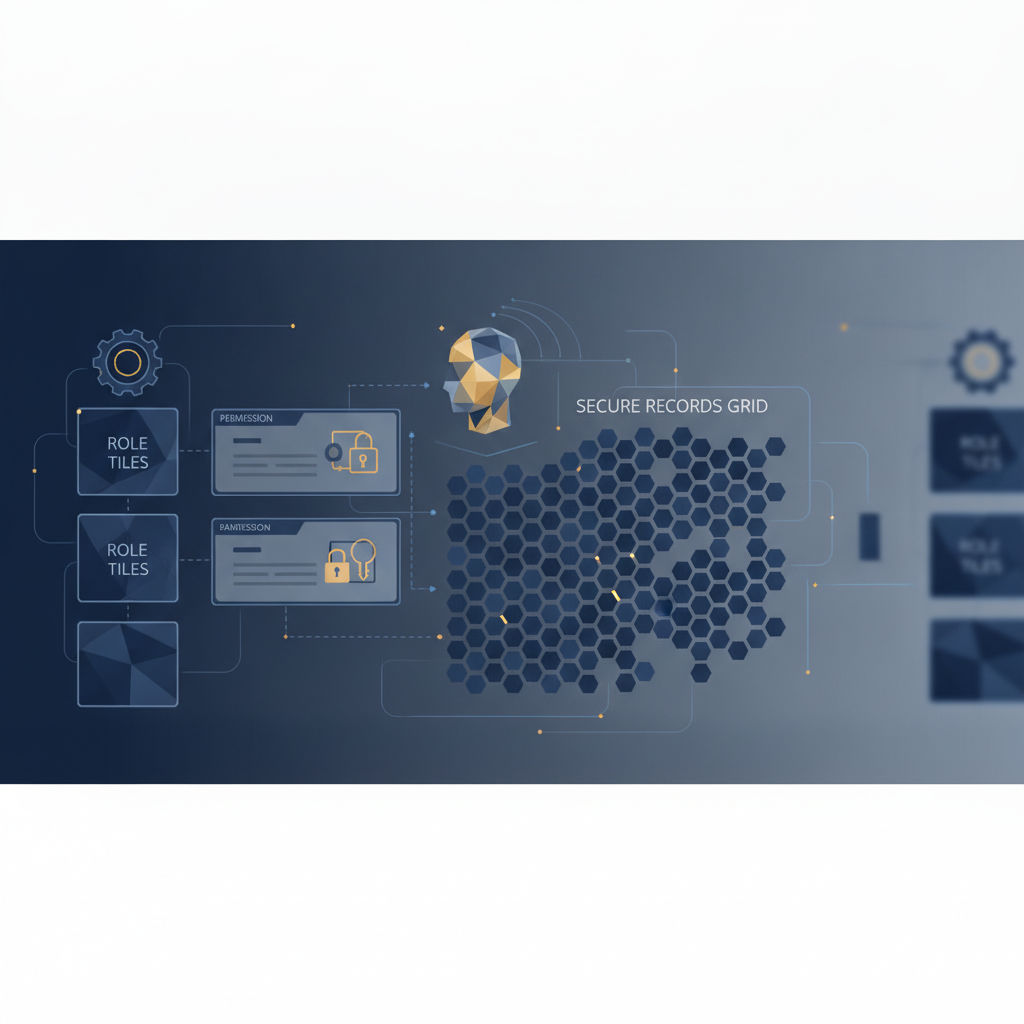
Can a home-care agency prove that an administrative worker used only the protected health information needed for an assigned task? A login report alone cannot answer that question. It can show that an account accessed a system at a time. A stronger review connects the task, the data field, the role, the approved purpose, and the resulting action. That distinction is especially important when a virtual assistant supports intake, scheduling, authorization tracking, or referral follow-up.
Research question and evidence scope
This article examines what an operational access review can reasonably establish under the HIPAA Privacy Rule and Security Rule guidance. It compares the HHS Privacy Rule overview, HHS minimum-necessary frequently asked questions, and HHS Security Rule guidance. These are primary federal sources. They explain the framework and safeguards, but they do not prescribe one software configuration or one staffing model. No agency access logs were inspected, so the proposed review is a control design, not a measured breach rate or compliance certification.
Minimum necessary is a context question
The three source documents can be checked directly: HHS HIPAA Privacy Rule, HHS minimum-necessary guidance, and HHS Security Rule guidance. They are cited here so a reader can distinguish federal source language from the article's operational analysis. None of the links establishes that a particular home-care agency's permissions are appropriate without reviewing its tasks, agreements, systems, and policies.
HHS describes minimum necessary as a limit on uses, disclosures, and requests of protected health information, subject to important exceptions and the facts of the activity. That means an agency should define the purpose before it decides what an administrative role needs to see. “Scheduler” or “intake assistant” is not enough detail. The task may require a service address and availability window, while a clinical note or diagnosis may not be required for the same step. The exact fields depend on the approved workflow and the agency's role-based controls.
The review should document the difference between a field being visible and a field being used. A system may expose more information than a worker opens. That can still be a design concern, but it is not the same evidence as a record showing that the worker viewed, copied, exported, or disclosed the information. Reports should keep those events separate.
A field-level review model
| Question | Evidence | Cautious interpretation |
|---|---|---|
| What task was assigned? | Ticket, queue item, or approved workflow | The task was authorized for review |
| What data was needed? | Field-level purpose note | The minimum set was defined locally |
| What did the account access? | Audit log and system event | The account touched those records |
| What action followed? | Update, message, or routing record | The action occurred, not that it was correct |
| Was access exceptional? | Break-glass reason and approver | An exception was recorded for review |
This model prevents a common reporting error: treating an account's broad permission as proof that every accessible field was necessary. It also prevents the opposite error of treating every access event as suspicious without reading the task context. A record lookup during a scheduled callback may be expected. A bulk export unrelated to the queue may require escalation. The review needs enough context to tell those cases apart.
What support staff may do
An administrative assistant can work from a minimum-field view, verify that a recipient is in an approved contact record, document an outbound message, and route a privacy question. It can flag an access event that lacks a linked task. It should not decide that a broad permission is acceptable, disclose information to an unverified family member, alter clinical content, or investigate a suspected incident beyond its approved instructions. HHS guidance supplies the governing concepts; the covered entity and its business-associate arrangements define the local controls and responsibilities.
Access reviews should also include offboarding and temporary assignments. A worker can have appropriate access on Monday and excessive access after a role change on Friday. A static quarterly roster will miss that transition. The useful evidence is the approval date, effective date, expiration date, and removal confirmation. If a vendor or business associate is involved, the agency must follow its agreements and security procedures rather than assuming that a shared queue removes the need for governance.
Methodology and limitations
The method was a close reading of three HHS primary sources. The review did not interpret a specific state privacy law, contract, business-associate agreement, electronic health record configuration, or incident. It does not offer legal advice or a pass-fail threshold. Minimum-necessary analysis has exceptions, and a qualified privacy or security owner should resolve situations that fall outside the normal workflow. Audit logs can also be incomplete, so the report should disclose retention periods, time zones, and event types included.
Conclusion
The evidence-led answer is that an access review can show whether an event is linked to an approved task and whether the data used appears consistent with a locally defined purpose. It cannot prove appropriateness from the login alone. A home-care staffing workflow becomes safer when it narrows the screen, records the reason for exceptional access, and sends ambiguous cases to an accountable privacy or security owner.
Evidence-led operating conclusion
Count linked task records before counting access events. Separate viewing, editing, exporting, and disclosure. Report missing context as a control gap rather than inferring intent. This produces a useful operational benchmark without claiming that an internal spreadsheet or virtual assistant process, by itself, satisfies every HIPAA obligation.
A practical sampling frame
Review a mix of routine and exceptional tasks. Include a new referral, a schedule change, an authorization follow-up, an inactive record, and any export or break-glass event allowed by policy. For each sample, ask whether the task existed before the access, whether the fields opened matched the task, whether the communication recipient was verified, and whether the record was retained according to policy. A small, well-described sample is more informative than a large total with no task context. Record the sampling period and exclusions so a later reviewer does not mistake the exercise for a population-wide finding.